Ice at the eaves and winter leaks in West Orange
Ice Dam Damage in West Orange, NJ
Is ice piled along the eaves of your West Orange roof letting water into the ceiling? Snow that melts and refreezes there can back water up under the shingles. Call (973) 841-8483, describe the ice and the stain, and a visit can be arranged.
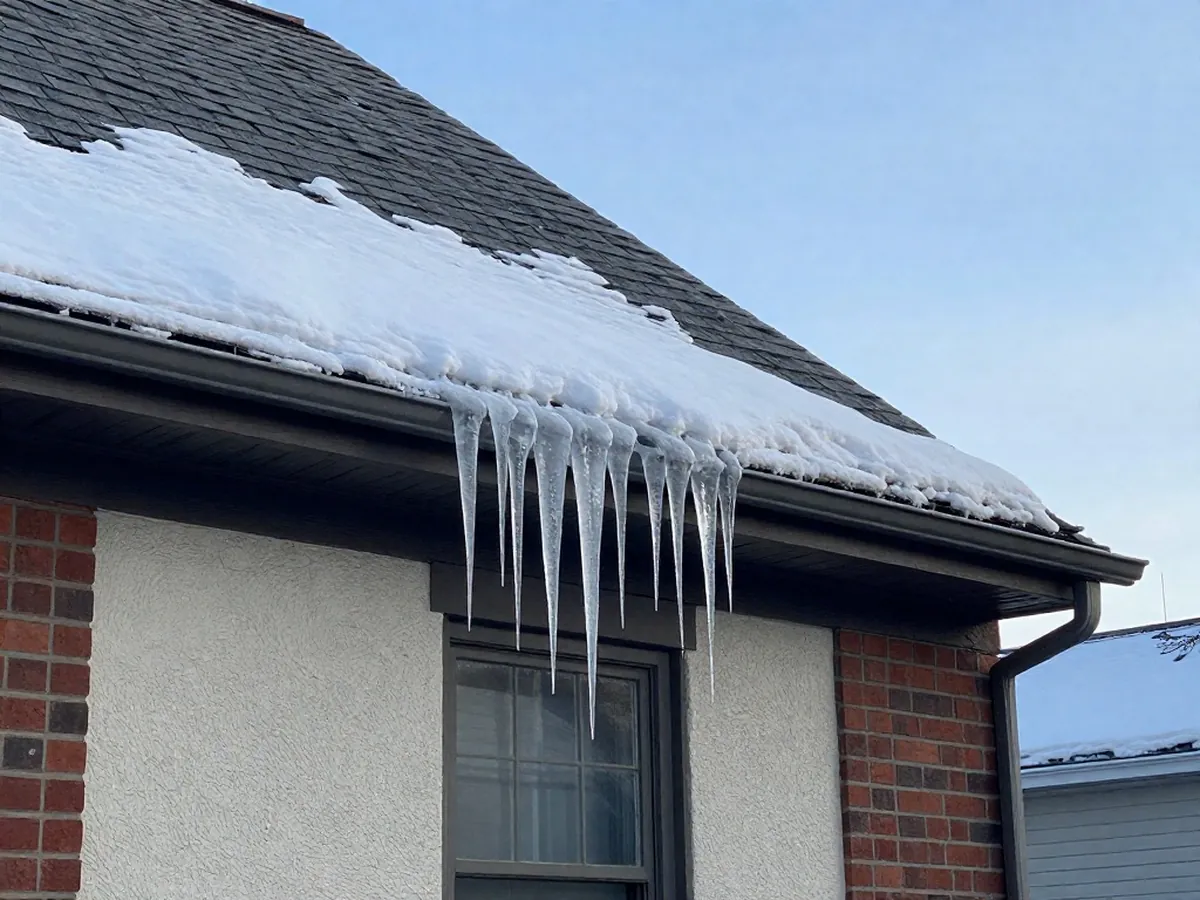
Hold off and get help if
- Ice or snow is sliding toward a walkway, car or door: keep people and pets clear, since it can fall without warning.
- Meltwater is trickling from a ceiling fixture or socket: keep out of the room, and dial 911 at the first spark or smell of burning.
- A ceiling is bulging with trapped meltwater: keep everyone out of that spot, and call 911 if the drywall seems about to give way.
- Someone plans to chip the ice from a ladder: do not, because UMass warns that it hurts people and roofs; stay on the ground.
Questions for the roofer
Ice-dam questions that point at the attic
Is the cause heat loss, poor ventilation or both? The Building America guide lists air sealing as step one.
Does the quote cover the attic, or only the edge of the roof? A repair at the eaves leaves the cause where it was.
What does the roofer say about heat cables and membranes? The UMass article advises against cables and calls membranes a band-aid.
What will the written quote list, and what start and finish dates does the contract give?
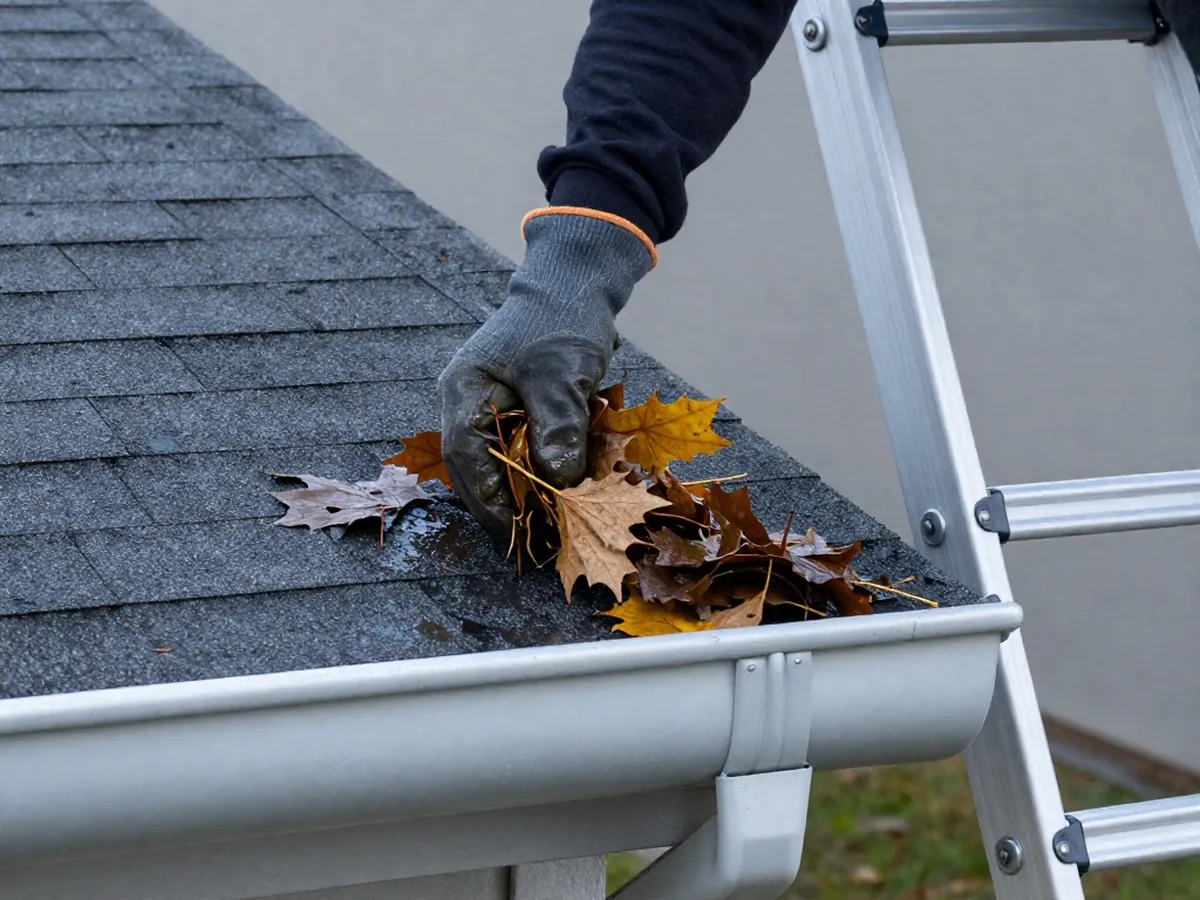
What the roofer looks at
- Call (973) 841-8483, describe the ice and the spot where water appears, and a visit can be arranged.
- The roofer can start in the attic, looking for wet boards, frost on nail tips and gaps where warm air rises.
- Outside, the eaves, valleys and gutters get a look for damage the ice left.
- Insulation and ventilation get a look, since those decide how much heat reaches the roof.
- The roofer can explain what a membrane under the shingles can and cannot do about the cause.
- The visit closes with the options and a note on the paperwork question.
What you may notice
- A heavy band of ice at the eaves, icicles hanging beneath it
- Water stains on a ceiling or an outside wall after a thaw
- Wet or frosty insulation and roof boards in the attic
- Snow that melts in patches on the roof while the eaves stay frozen
- Peeling paint or damp drywall near the top of an outside wall
Why it happens
- Heat from the house escaping into the attic and warming the roof
- Air leaks around light fixtures, hatches and wiring that carry warm air upward
- Thin attic insulation that lets heat pass through
- Poor ventilation, which lets the roof boards stay warm
- Snow deep enough to hold in the heat underneath it
Next door on the list
Winter trouble that overlaps
Ice that pulls on the edge often takes the gutters along, so see gutter repair. Water that already got in is a roof repair question. A roof inspection can look at the attic and the eaves together.
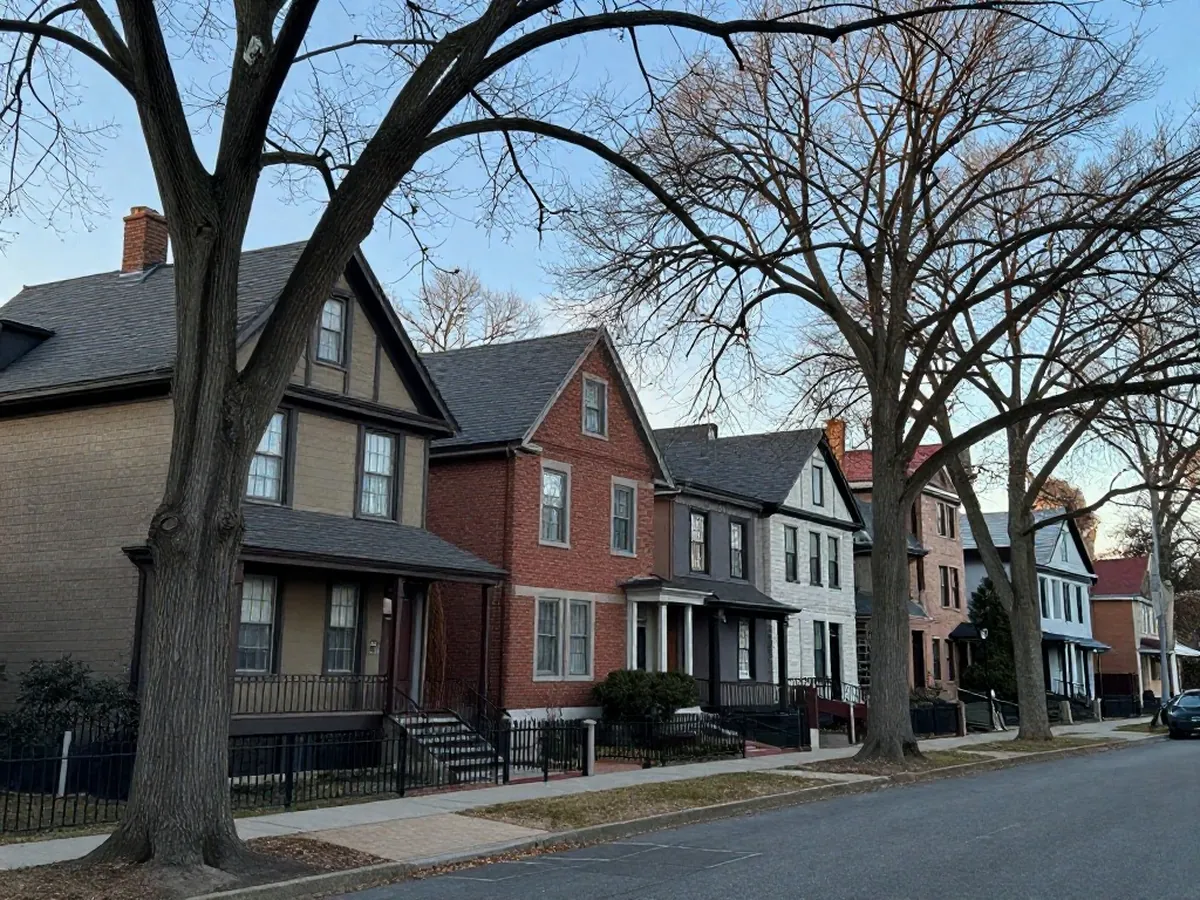
Notes from around West Orange
- The average January day in Caldwell runs from a low of 22.9 to a high of 38.3 degrees, so it crosses 32 in both directions. The same normals count 25.7 freezing nights and 9.3 days that never get above freezing. The weather on your street may differ.
- Bulletin 07-3 calls for an ice barrier only in areas with a January daily average of 25 degrees or below, and the bulletin points to Sussex County. Caldwell's January average is 30.6, so West Orange falls outside that rule by this measure.
- The Building America Solution Center lists air sealing first among prevention steps, then insulation, then continuous ventilation. Those are attic jobs more than roof jobs, which is why a roofer asks about the attic first.
What moves a quote
What changes a quote when the trouble is ice
The scope depends on how far the water traveled and what it soaked. Wet insulation and boards need to be removed before a ceiling can dry. A quote limited to the roof edge covers less ground than one that includes the attic, and the Building America guide treats attic work as the core of prevention.
Questions and answers
How urgent is an ice dam, from 1 to 10?
Imagine a ten-point scale. Eight through ten: a ceiling bulging with water, meltwater at a fixture, or heavy ice poised over a walkway. Keep clear, and call 911 if anyone is at risk. Four through seven: a stain that grows with every thaw, so dial (973) 841-8483 this week. One through three: icicles over a dry attic, which call for photographs and a watch on the next thaw.
How does an ice dam come to be?
Heat from the house melts snow on the upper roof. Meltwater slides down to the cold overhang and turns to ice again, and the ridge keeps growing until water backs up under the shingles. Both the Building America guide and the UMass article describe the same sequence.
Do heat cables solve it?
A UMass article from 2011 advises against them, saying the cable can create a dam just above it. It calls membranes and metal roofs band-aid measures that treat symptoms, and puts air sealing, insulation and ventilation first.
Does New Jersey's ice barrier rule apply in West Orange?
Bulletin 07-3 applies the rule to areas whose January average is 25 degrees or below, and it points to Sussex County. Caldwell's January average is 30.6, so by that figure West Orange is outside the rule. A roofer may still recommend a membrane at the eaves and in valleys.
What can be done about snow on the roof in the meantime?
The UMass article reports that clearing snow carefully with a roof rake does help, with a warning about damaging the roof. Ask a roofer before buying or using one.
Is ice dam damage handled in Orange, Millburn, Roseland and Essex Fells as well?
Yes. Local notes for each town sit on roofing in Orange, roofing in Millburn, roofing in Roseland and roofing in Essex Fells. When the stain is in one of those towns, call (973) 841-8483 and name the street.
Where the paperwork lives
Ice barriers, attic work and the code
The state code's ice barrier requirement applies only where the January average sits at or under 25 degrees, a zone the bulletin ties to Sussex County. Separately, New Jersey counts repair of roof covering on a detached one-family or two-family house as ordinary maintenance. The rules page sets both next to West Orange's handout.
Call (973) 841-8483 and talk the roof through.
Call (973) 841-8483Keep three things handy: the address, a description of the damage and a rough roof age. Renters: roof work is set up by the owner, so the landlord comes first. Dial (973) 841-8483 if you are in one of the five towns listed here.