Flashing, the metal at joints
Flashing is thin metal laid at every joint where a roof meets another surface, for example a valley, a vent pipe, a wall or a chimney, and it sheds water at the seam. ARMA names flashings as the weakest points on a roof, and flashing and chimney leaks shows what a roofer checks.
Underlayment, the sheet under the shingles
Underlayment is a water-resistant layer between the roof boards and the shingles. A FEMA fact sheet written for high-wind regions asks for it every time, so a quote that names the underlayment is describing more of the job.
Deck, or sheathing, the boards beneath
The deck is the layer of boards or plywood that everything else is nailed to. The Department of Energy's repair brief has damaged roofing stripped back to the sheathing, and that the wood needs to read below 20 percent moisture content before it is covered.
Ice barrier, a membrane at the eaves
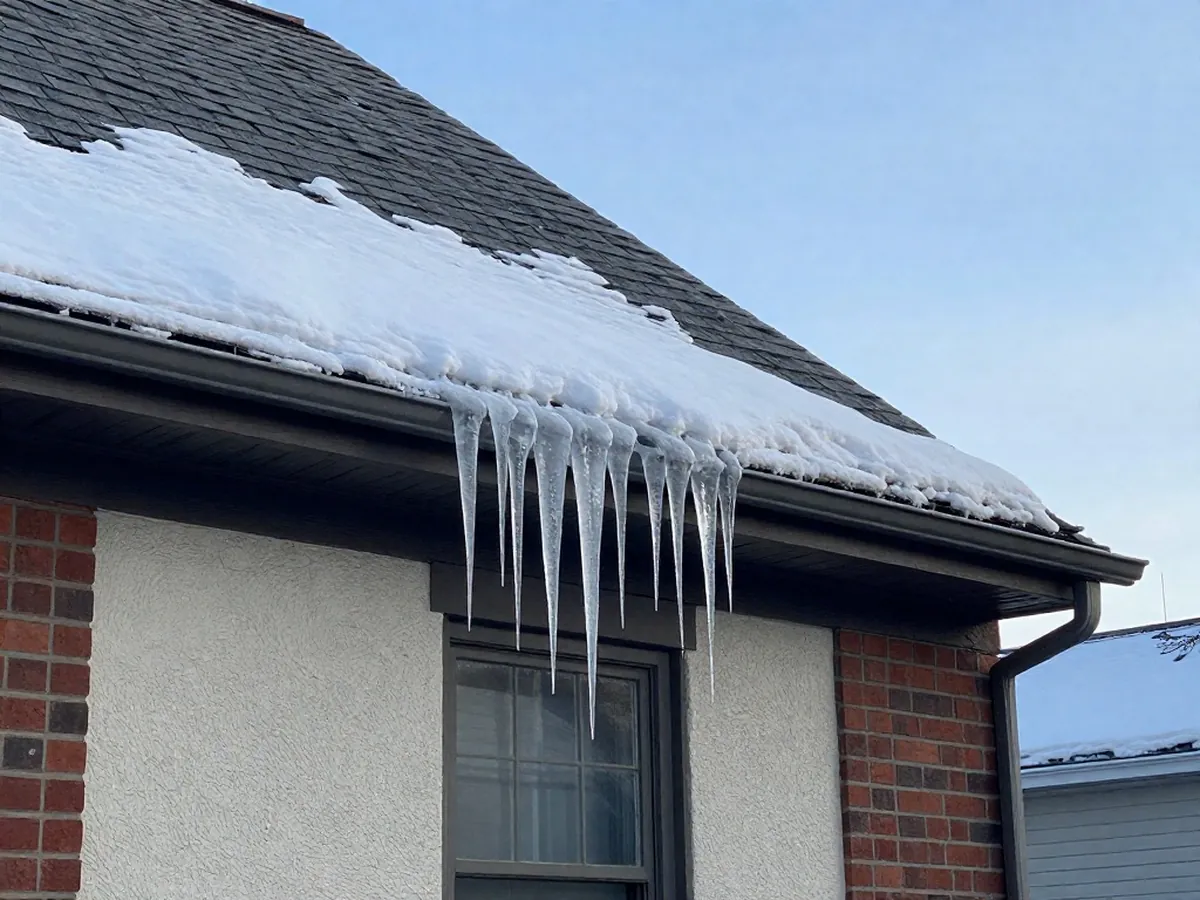
An ice barrier, also called an ice dam membrane, is a sheet laid under the shingles along the eaves to hold back meltwater. New Jersey's Bulletin 07-3 requires one only where the January daily average is 25 degrees or below, and it points to Sussex County.
Ponding, water that stays two days
According to ARMA, ponding is water still on a roof after 48 hours. It adds weight to the deck, and freezing and thawing can scrub the membrane beneath it. Flat roof repair has the details.
Low-slope, the roofs people call flat
The Department of Energy defines a low-slope roof as one with a pitch of 2:12 or less, meaning 2 inches of rise over 12 inches of run. Steeper roofs are the ones usually covered in shingles.
Scupper and drain, the exits
A drain is an opening in the roof surface that carries water into a pipe. A scupper is an opening through the edge wall that lets water spill out. ARMA warns that debris can clog both and cause more ponding.
Valley, where two slopes meet
A valley is the V-shaped line where two roof slopes come together. The Department of Energy says ice and water products are widely used in valleys as backup if the main covering is damaged.
Leader, the pipe from gutter to ground
A leader is the downspout that carries water from the gutter to the ground. West Orange's handout and the state's ordinary-maintenance rule both name gutters and leaders as repairs that need no permit. The EPA has guidance on where the water ends up.
Ordinary maintenance, the state's no-permit list
New Jersey uses this term for work that can go ahead without a permit application or a notice to the town. The list is not all-inclusive, and it never includes work that affects structural or fire safety. It names roofing work on detached homes meant for one or two families. The rules page has the wording.