Leaks around chimneys, walls and vents in West Orange
Flashing and Chimney Leaks in West Orange, NJ
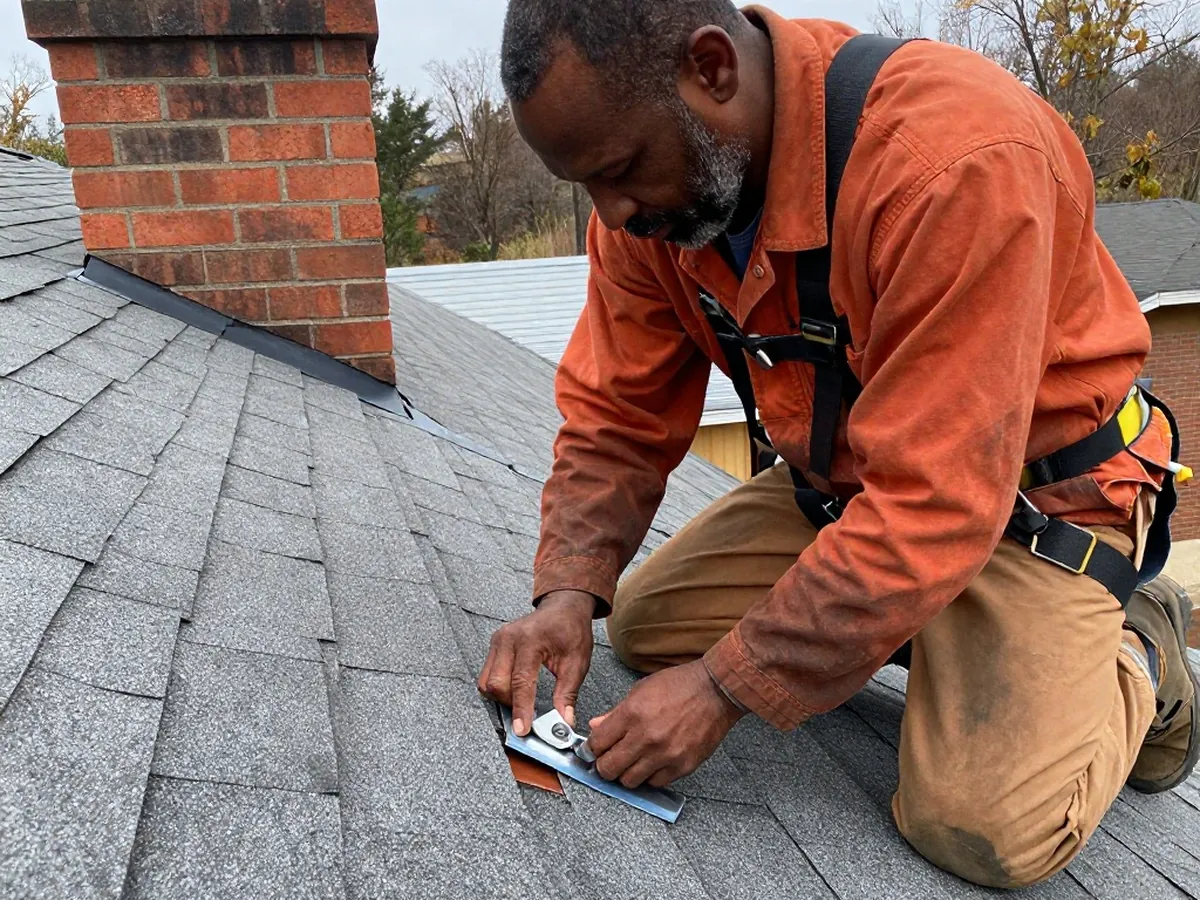
Does a stain show up on the wall or ceiling beside a chimney in West Orange? The thin metal where a roof meets brick, a wall or a vent pipe is a common place for water to get in. Call (973) 841-8483, say where the stain appears, and a visit can be arranged.
Hold off and get help if
- A carbon monoxide alarm is sounding, or there is a smell of smoke or gas: leave with everyone in the house and, once outside, dial 911 or the gas utility.
- Bricks or a chimney cap look loose or leaning: keep people off the ground beneath it, and dial 911 if anything seems about to drop.
- Water drips from a fixture or a socket on the chimney wall: stay clear of that room, and dial 911 at the first spark.
- A ladder would stand near wires, or the roof is wet or icy: stay on the ground.
Questions for the roofer
Chimney-leak questions for the roofer
Is the leak at the metal, the sealant, the brick joints or the cap? The answer sets who does the work.
Who handles the masonry, if the mortar is part of it?
Will the old flashing be reused or replaced, and what goes in its place?
What do the contract's description of the work and its start and finish dates read?
What the roofer looks at
- Call (973) 841-8483, tell where the stain falls compared with the chimney or vent, and a visit can be arranged.
- The roofer can start in the attic, checking the boards around the chimney for water marks.
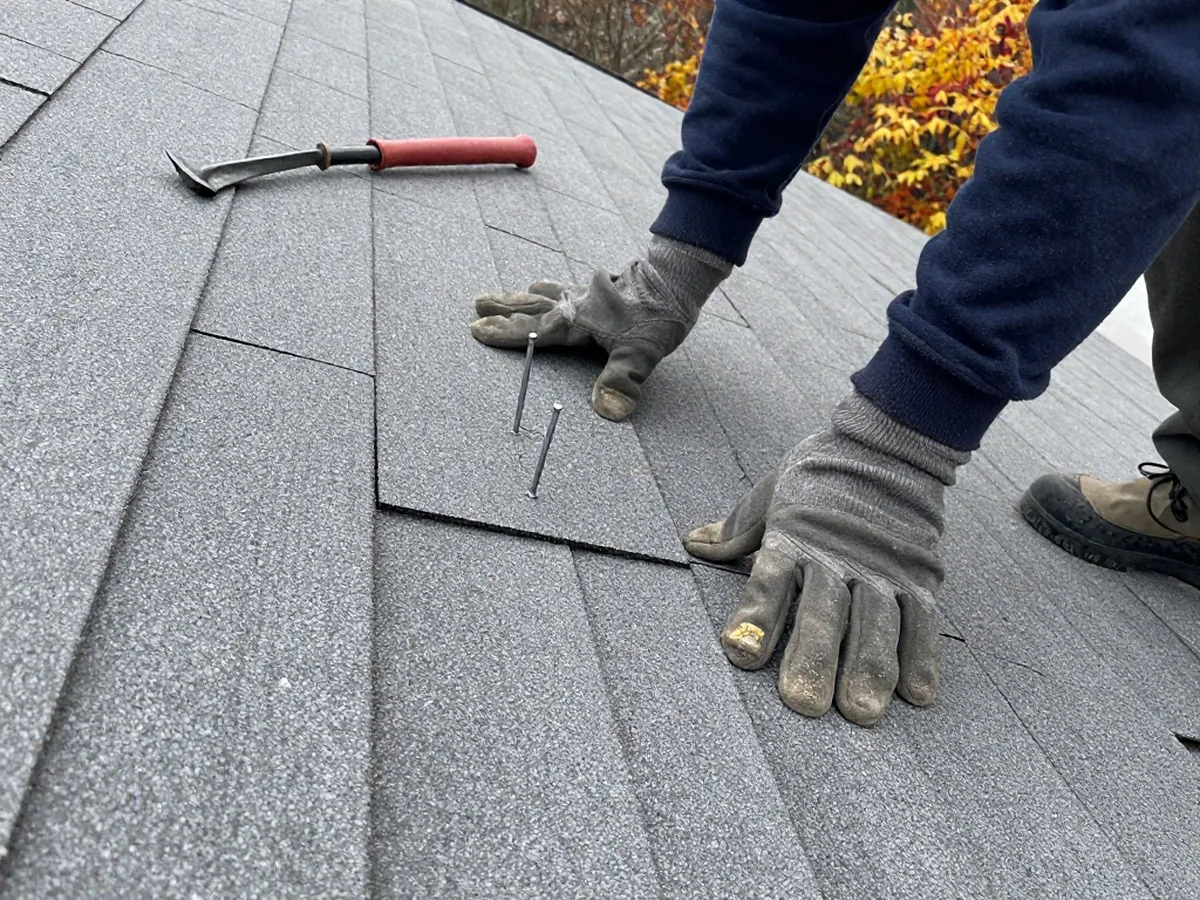
- Outside, the flashing on each side of the chimney, the cap and the mortar joints get a close look.
- Vent pipes, the collars around them and any place a wall meets the roof are checked on the same visit.
- The roofer can say whether the metal can be resealed or repaired, or needs replacing, and whether masonry work is involved.
- The visit closes with the options and whether the town office needs to know about the work.
What you may notice
- A stain on a ceiling or wall that lines up with a chimney or vent pipe
- Rust, gaps or lifted edges in the metal beside the chimney
- Cracked or crumbling sealant where metal meets brick
- Water marks on the attic boards around the chimney
- A drip that starts only in wind-driven rain
Why it happens
- Flashing, the strip of metal that sheds water at a joint, that has bent, rusted or pulled loose
- Sealant at the joint that has dried and cracked
- Mortar between chimney bricks that has crumbled
- A vent pipe's rubber collar that has split
- Wind that drives rain sideways into a joint
Next door on the list
Leaks that start somewhere else
A stain near a chimney sometimes comes from shingles farther up, which is a roof repair job. A roof inspection can follow the water to its source. Winter leaks at the eaves belong with ice dams.
Notes from around West Orange
- ARMA's guidance after Sandy names flashings as the weakest points on a roof and suggests checking them from the attic for water stains.
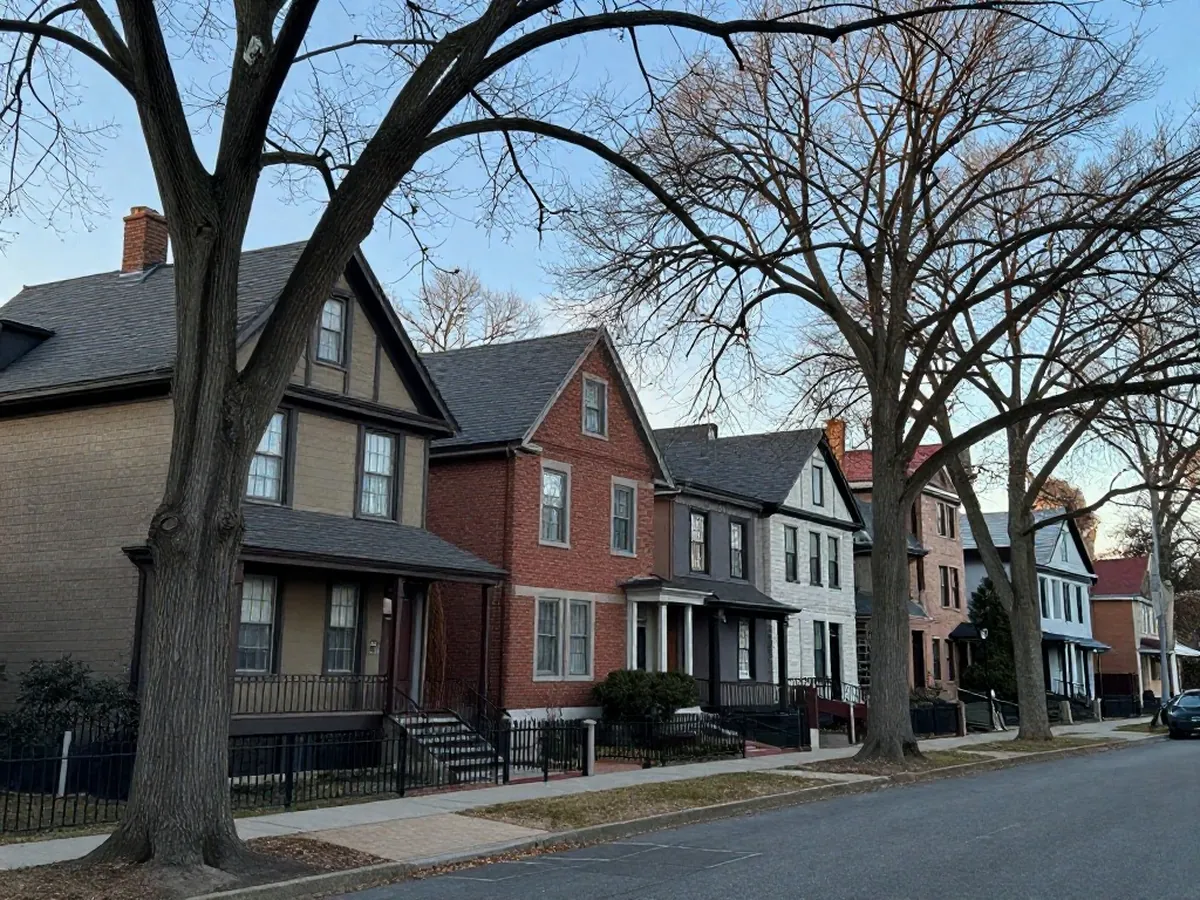
- The Llewellyn Park Gatehouse, built in 1857 in West Orange's Llewellyn Park Historic District, received a $150,000 state preservation grant in 2020 to help pay for exterior repairs that create a watertight envelope.
- West Orange's building handout says any work that affects the exterior of a property in a historic district goes to the Historic Preservation Commission for review. A chimney or flashing job there may need that step.
What moves a quote
What stretches a flashing quote
The number of joints matters: a chimney has four sides, and each wall or vent adds more. Masonry work is a separate trade. Roof height and slope change the setup. And shingles beside the flashing may have to be lifted and reset, which widens the job.
Questions and answers
How urgent is a chimney leak, from 1 to 10?
Consider a ten-point scale. Eight through ten: a carbon monoxide alarm, a smell of smoke or gas, or a chimney that leans. Leave, then call 911 or the utility. Four through seven: a stain that comes back after every driving rain, which is reason to call (973) 841-8483 this week. One through three: one old mark on the ceiling that has stayed the same.
What is flashing, and why does it fail first?
Flashing is the thin metal that sheds water at a joint, such as where a roof meets a chimney or wall. ARMA names flashings among the weakest points on a roof; the metal and sealant at a seam are where one surface meets another.
What is a roof valley?
A valley is the V where two roof slopes meet. The Department of Energy says self-sealing ice and water products are widely used in valleys as a backup layer if the main covering is damaged. Valleys carry a lot of water, so they are worth a roofer's look.
How does the attic show a flashing leak?
Water marks on the boards or the nails around a chimney point to a leak at the flashing. ARMA suggests checking flashings from the attic for stains, and the Department of Energy says wet insulation has to come out for the ceiling below to dry.
Why not caulk the joint from a ladder?
A ladder near a chimney is a fall and a wire risk. NIOSH reports upward of 100 deaths a year from ladder falls, and advises about 75 degrees of angle, three points of contact and a ten-foot minimum distance from power lines.
Are chimney leaks in the other four towns covered too?
Yes. All five towns are served, so open roofing in Orange, roofing in Millburn, roofing in Roseland and roofing in Essex Fells for each town's notes, then dial (973) 841-8483 with the address.
Where the paperwork lives
Flashing, chimneys and the code
The state's ordinary-maintenance line names existing roof covering where the building is a detached one-family or two-family home. The rule text does not mention flashing or chimney masonry by name, so the construction office at (973) 325-4112 is the one to ask. In a historic district, exterior work also goes to the Historic Preservation Commission, which the rules page covers.
Call (973) 841-8483 and talk the roof through.
Call (973) 841-8483Keep three things handy: the address, a description of the damage and a rough roof age. Renters: roof work is set up by the owner, so the landlord comes first. Dial (973) 841-8483 if you are in one of the five towns listed here.